
The Energy Accounting Equation
How to avoid burning out by co-opting terminology from established professions and doing fake math

There are few things that theoretical physicists and hippies wearing quartz crystals to ward off pancreatitis agree on, but “everything is energy, man” might at least buy you some time with either group.
So, let’s talk about energy. The spiritual community has co-opted the term a long time ago, and while their vague and nebulous definition of energy might not exactly satisfy the more scientifically minded, it still has an intuitive appeal. At the very least, we all know what it feels like to run out of energy, to be very energetic. And we all know that person that just sucks all the energy out of a room. It’s a useful concept that most of us share, even without being able to define what exactly that energy is we're talking about.
I think that in the most intuitive terms, a burnout is the result of a continuous energy deficit. In other terms, you spend more energy than you get in. And that takes us to a simple mental model that I apply whenever I’m feeling in a funk for longer than a few days:
Ability to improve your life = energy in - energy out
It’s what I call the Energy Accounting Equation. Without further specifying what that energy is, it represents “stored up potentiality.” — You use the energy you have to do all the amazing things that make your life good and interesting. But there are some things that also just suck your energy out. There’s chores, there’s dealing with stressful relationships, there’s worrying about money — all those are energy sinks, and some of them are just unavoidable for at least some amounts of time.
Other things give you energy. If you’re an extrovert, that might be being around other people, if you’re an introvert, it might be some recharge time alone or a one-on-one conversation with a good friend.
Whatever happens during your day, at the end of it you either ran out of energy, or you got a little excess energy left. Over time, running out of energy every day drains your reserves, and you burn out. Getting more energy in than you spend and you build up reserves that help you through hard times and allow you to do even more.
How to use this mental model
The obvious use for energy accounting is when you’re feeling overwhelmed, in a funk, depressed, or just under the weather for too long. Here’s what you can do:
Make a list of the things that energize you, and of the things that are draining energy. Not things that could energize you in theory, but the actual sources of energy you had in the past weeks — I know that working out is a great way to get energy in, but sometimes I just can’t get over the hurdle to put on my running shoes, so working out won’t show up on the energy income statement.
In the terms of energy accounting, there’s only two ways to get on top of things: increase income reduce costor reduce cost. Give some things that suck up your energy the boot, even if temporarily. That can be work, some friendships or relationships, other commitments you have, goals you set for yourself but feel like you’re falling behind on.
Pay attention to what gave you energy, and double down on that. It’s not a cure-all, but you can’t expect to change for the better if you keep leaking more energy than you get in.
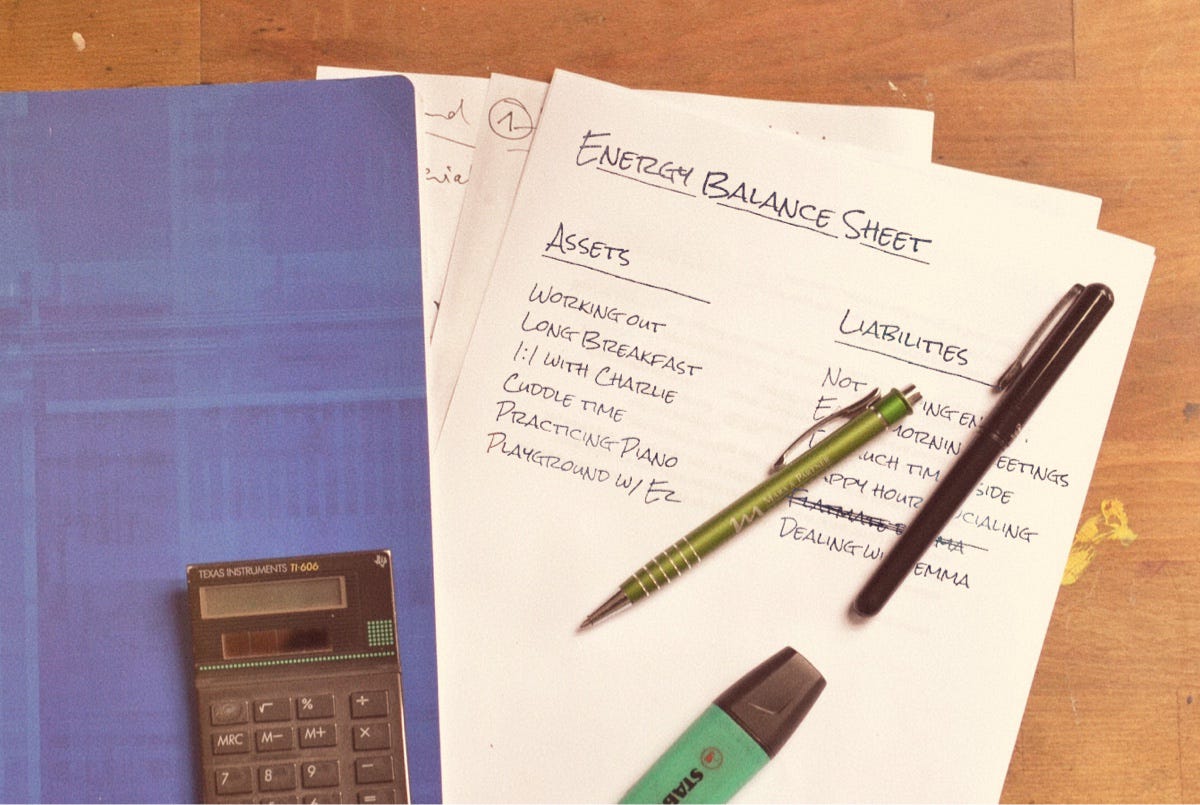
Looking at your balance sheet is helpful not only when things are not going your way, but also when you feel great and inspired: is that because you’re getting more energy in, or because of the absence of things that suck your energy out? Often, vacations are “recharging” not because I get energized, but because there’s a lot less to take care of and worry about.
Separating the things you spend your time with into energy sources and energy sinks is an easy way to decide what needs change for you to get out of the red again.
Why this mental model works
When your life has a lot of routine, it’s easier to set things up in a way that you produce an energy surplus (or at least come out even) without having to think too much about it. In times of constant changes, things are exciting, but predictably coming out on top is lot harder.
The hardest times in recent memory for me were the months after my son was born. So many people told me that the moment you look into your newborn’s eyes the first time your life just instantly changes and you’re filled with love and purpose. Well, maybe that happens for some, but it sure took a lot longer for me. The truth is, I love my son a lot more now that he’s going on two than when he was an delightfully personality-free little meat-sack. Now I enjoy being around him so much that it makes all the hard parts of parenting more than worth it; I’m getting more out of it than I’m putting in, and that makes parenting as such “energetically self-sufficient”. Back when he was born, that was certainly not the case, and it made me feel like a horrible failure of a parent. On top of that though, between being in the early stages of a startup I just launched and suddenly having this Minimum Viable Person around1 I just spent way more energy than I was getting out of those experiences, and I burnt out.
My home remedy of a generous helping of “suck it up buttercup” and just push through things weren’t helping at all: with enough reserves, we can get through a temporary energy deficit. But when the game changes, and your sources of energy as well as your energy sinks change, toughening up won’t help: I needed to reassess my balance sheets and make sure I get more energy in than out. That meant getting out of commitments that didn’t bring joy, sunsetting friendships that took more out of me than they returned, spending a lot more time outside and in the sun, making food from scratch, and finding work I actually cared about, even though the pay was temporarily worse.
Self-care is not about epsom salt baths and dark chocolate and binging on Netflix, it’s constructing a life that you don’t have to continually run away from.
It's only fair to point out that my partner did most of the work to launch our MVP, I was more of a… seed investor. Yes, I’ll see myself out.